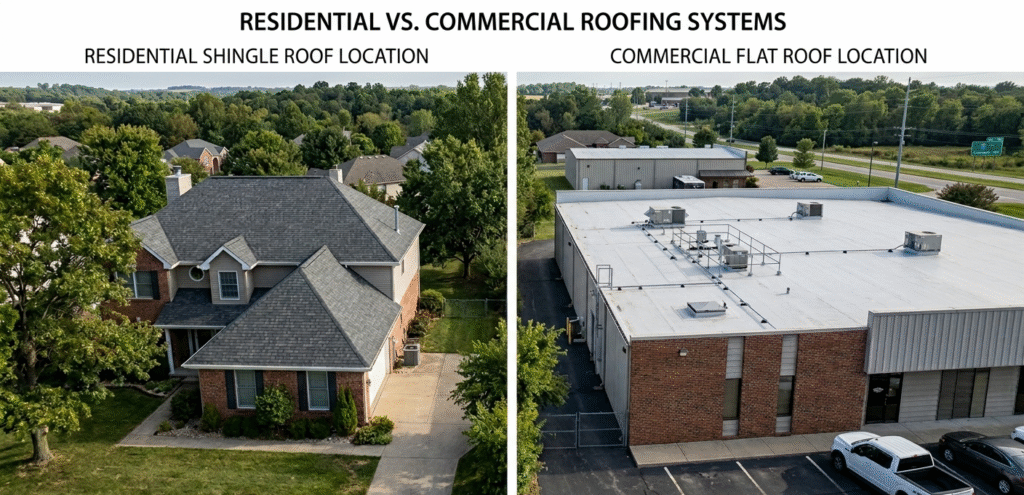
Most people do not think much about roofing until leaks, storm damage, or aging materials suddenly force major decisions. Once homeowners and property managers begin researching roofing systems, many quickly realize that commercial and residential roofing differ significantly in design, materials, maintenance, and installation methods. The needs of a family home are very different from the needs of a large commercial building.
That is why property owners often rely on experienced roofing companies in Missouri to help them understand which roofing systems best fit their structure and long-term goals. Residential roofs typically prioritize curb appeal and weather protection, while commercial roofing systems prioritize drainage, durability, energy efficiency, and long-term performance.
What Does Commercial Roofing Mean?
Commercial roofing refers to roofing systems specifically designed for commercial buildings such as warehouses, office buildings, restaurants, apartment complexes, retail centers, industrial facilities, and schools. Unlike residential roofs, commercial roofing systems are usually installed on flat or low-slope surfaces and are engineered to support larger structures, rooftop equipment, and higher long-term performance demands. Many roofing companies in Missouri explain that commercial roofs require a completely different approach. They must handle drainage, insulation, maintenance access, and foot traffic in ways that differ significantly from residential roofs.
At The Wright Construction & Roofing Company, we often see commercial roofing projects involving materials such as TPO roofing, EPDM rubber roofing, PVC systems, modified bitumen, built-up roofing, and metal roofing systems. These materials are selected because they perform well on large flat surfaces where water drains more slowly. One Missouri business owner contacted us after noticing persistent standing water on a low-slope roof. During inspection, drainage design issues and membrane deterioration were discovered, requiring specialized commercial roofing repairs rather than traditional residential roofing solutions.
Commercial roofs also support mechanical systems that residential roofs rarely carry. HVAC equipment, exhaust systems, solar panels, vents, and refrigeration units are commonly installed on commercial buildings. It adds both weight and maintenance considerations. Roofing companies in Missouri that specialize in commercial work understand how these additional systems affect drainage patterns, waterproofing requirements, and long-term structural performance.
According to the U.S. General Services Administration, roofing system design and maintenance play an important role in moisture management, building efficiency, and long-term performance. Commercial roofing projects also typically involve larger budgets, stricter code compliance requirements, and more detailed maintenance planning than standard residential roofing systems.
What Is The Difference Between Commercial And Residential?
The biggest difference between commercial and residential roofing is how each roof is designed to function. Residential roofs are usually steep-sloped and visually focused, while commercial roofs are often flat or low-sloped with functionality and durability as the primary priority. Roofing companies in Missouri often explain that residential roofs are designed with aesthetics and architectural style in mind. While commercial systems focus heavily on waterproofing, drainage management, and energy efficiency.
Residential roof replacement projects commonly involve asphalt shingles, architectural shingles, metal roofing, cedar shake, or tile roofing. These systems rely heavily on slope and gravity to shed rainwater effectively while enhancing the home’s appearance. Commercial roofing systems, however, typically use membrane materials because flat roofs require continuous waterproof protection rather than overlapping shingles. Roofing companies in Missouri understand that using residential materials on commercial structures can create serious drainage and leakage problems over time.
Another major difference involves maintenance. Residential roofs usually require less frequent access because homeowners rarely walk on them regularly. Commercial roofs often require routine inspections and ongoing servicing because HVAC systems, vents, and rooftop equipment require technician access year-round. Roofing companies in Missouri that handle commercial projects must account for foot traffic, puncture resistance, and maintenance scheduling far more frequently than residential contractors.
Installation methods also differ significantly. Residential roofing crews focus heavily on curb appeal, flashing details, valleys, and architectural transitions. Commercial roofing systems require expertise in membrane welding, insulation systems, drainage engineering, and large-scale waterproofing. Roofing companies in Missouri often train commercial roofing crews separately because the technical requirements differ dramatically from those of traditional residential roof installation.
What Are The Three Types Of Roofs?
Most roofs fall into three primary structural categories: flat roofs, low-slope roofs, and steep-slope roofs. Roofing companies in Missouri carefully evaluate the structure, drainage needs, and purpose of the building before determining which type of roof works best for a particular property. Roof slope affects everything from material selection to maintenance requirements and long-term durability.
Flat roofs are most commonly associated with commercial buildings. Although they appear completely flat, they still have slight slopes that allow water to drain gradually. Flat roofs maximize usable space and allow easy installation of HVAC systems, solar panels, and other rooftop equipment. Roofing companies in Missouri often recommend flat roofing systems for commercial buildings because they maximize space efficiency while supporting large-scale operations.
Low-slope roofs function similarly to flat roofs but have a slightly greater pitch to improve drainage. Many warehouses, apartment buildings, and industrial properties use low-slope roofing systems because they balance drainage efficiency with practical building design. Roofing companies in Missouri frequently install TPO, EPDM, or modified bitumen systems on low-slope roofs because these materials perform well in slower-drainage conditions.
Steep-slope roofs are most common in residential construction. These roofs shed water and snow efficiently while also creating strong curb appeal and architectural variety. Roofing companies in Missouri commonly install asphalt shingles, architectural shingles, metal roofing, and cedar shake systems. For steep-slope homes, these materials rely on gravity and roof pitch to ensure proper water management and weather resistance.
What Is The Difference Between Commercial And Residential Shingles?
Residential shingles are specifically designed for steep-sloped homes where appearance and weather resistance are major priorities. Commercial roofing systems rarely use traditional shingles because flat and low-slope roofs require continuous waterproof membranes instead of overlapping shingle systems. Roofing companies in Missouri often explain that roof slope heavily determines which materials will perform safely and effectively over time.
Residential shingles commonly include three-tab, architectural, luxury, and impact-resistant shingles. These materials overlap in layers that direct water downward efficiently on sloped roofs. Roofing companies in Missouri often recommend architectural shingles because they offer improved durability and stronger wind resistance while enhancing curb appeal for homeowners.
Commercial roofing systems operate very differently. Instead of relying on overlapping layers, commercial roofs often use large waterproof membranes that seal the roof continuously across flat surfaces. One Missouri property owner once asked why a commercial building could not simply use standard shingles. Roofing companies in Missouri explained that flat roofs retain water longer, so shingles alone would eventually allow moisture intrusion and premature roof failure.
What Are The Types Of Commercial Roofs?
Commercial roofing systems come in several major categories depending on the building design, budget, climate conditions, drainage needs, and energy goals. Roofing companies in Missouri often help business owners compare the advantages and tradeoffs of each roofing system. Before major installation or replacement projects begin.
Some of the most common commercial roofing systems include TPO, EPDM rubber, PVC, modified bitumen, built-up, spray polyurethane foam, and metal roofing. Roofing companies in Missouri frequently recommend TPO roofing because it provides strong UV resistance, energy efficiency, and relatively low maintenance requirements for large commercial buildings.
EPDM rubber roofing remains a popular option because it performs well in harsh weather and offers excellent durability for flat roofs. Metal roofing systems also continue to gain popularity for industrial and agricultural properties. They often offer extremely long lifespans with relatively low maintenance requirements. Roofing companies in Missouri may recommend different systems depending on whether the property prioritizes longevity, insulation performance, maintenance simplicity, or installation costs.
One Missouri warehouse owner upgraded from an aging built-up roof system to a modern TPO membrane roof and quickly noticed improved energy efficiency and lower maintenance concerns. Roofing companies in Missouri often explain that no commercial roofing system is universally best, as every building has unique structural requirements and performance priorities.
What Are Different Types Of Roofing?
Roofing materials vary significantly depending on climate, building structure, budget, and appearance preferences. Roofing companies in Missouri commonly install asphalt shingles, metal roofing, slate roofing, cedar shake roofing, tile roofing, TPO membranes, PVC systems, EPDM roofing, and modified bitumen systems across both residential and commercial properties.
At The Wright Construction & Roofing Company, we often explain that no single roofing material works best for every situation. Roofing companies in Missouri evaluate weather exposure, roof pitch, drainage performance, expected lifespan, maintenance expectations, and budget limitations before recommending roofing systems. Missouri weather places significant stress on roofs due to storms, hail, snow, wind, and seasonal temperature swings.
Asphalt shingles remain one of the most common residential roofing materials because they provide affordability and reliable weather protection. Metal roofing continues growing in popularity because of its durability and long lifespan. Roofing companies in Missouri often recommend metal roofs for homeowners seeking stronger resistance against hail and storm damage.
Commercial roofing materials focus more heavily on waterproofing performance and long-term maintenance requirements. Membrane systems such as TPO and EPDM are especially common because they handle flat roof drainage more effectively than residential-style materials. Roofing companies in Missouri understand that choosing the right roofing system requires carefully balancing appearance, durability, efficiency, and long-term investment value.
How Long Does A Commercial Roof Last?
Commercial roof lifespan depends heavily on material type, installation quality, weather exposure, maintenance routines, and drainage performance. Roofing companies in Missouri often explain that preventive maintenance plays one of the biggest roles in extending the life of commercial roofs because small issues can gradually cause major damage if ignored for too long.
In general, TPO roofing systems may last 20 to 30 years, EPDM roofs often last 25 to 30 years, modified bitumen roofs may last over 20 years, and metal roofing systems can sometimes exceed 40 years with proper maintenance. Roofing companies in Missouri typically recommend regular inspections because drainage problems, membrane punctures, flashing failures, and ponding water can significantly shorten a roof’s lifespan.
One of the most common reasons commercial roofs fail prematurely is neglected maintenance. Small leaks and drainage issues often remain unnoticed for extended periods because flat roofs are harder to monitor visually from the ground. Roofing companies in Missouri frequently encourage property owners to schedule preventative inspections after storms and throughout seasonal weather changes.
A properly installed and maintained commercial roof protects much more than the building itself. It also protects inventory, operations, energy efficiency, structural stability, and long-term investment value. Roofing companies in Missouri understand that long-lasting roofing systems require both quality installation and ongoing maintenance planning. Still have questions? This article might help: What Causes Roof Shingles to Buckle? Common Problems Explained.
Final Thoughts
Commercial and residential roofing systems may serve the same general purpose, but they operate under very different structural, drainage, material, and maintenance requirements. Understanding those differences helps homeowners, business owners, and property managers make smarter long-term roofing decisions that better protect their investment and avoid preventable issues later.
At The Wright Construction & Roofing Company, we believe roofing systems should be designed around durability, safety, drainage performance, and long-term reliability rather than temporary fixes alone. Whether you are planning a residential roof replacement or exploring commercial roofing solutions, working with experienced roofing companies in Missouri helps ensure the system meets the property’s actual needs.
If you are looking for trusted roofing companies in Missouri, visit https://wrightroofingconstruction.com/ to learn more or contact us today.
Follow our social media pages below: